
Lives have many twists and turns. History is filled with stories of people who take forks in the road only to fade into the mist while a contemporary with similar ideas takes a different road and bursts into the sunlight of fame and fortune. Mark Zuckerberg is a personage known around the world, but who is Orkut Büyükkökten? Here are pics of the two social media founders side-by-side:

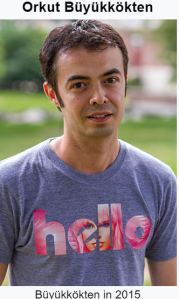
Image Sources: Wikipedia: Zuckerberg, Büyükkökten
Orkut Büyükkökten, who we’ll henceforth call “OB,” began thinking about social media as a child and learned coding at an early age. As a student at Stanford, he founded a social app, Club Nexus, not materially different from Zuckerberg’s Harvard spawned brainchild, The Facebook. OB even wrote his college thesis on efficient web browsing on handheld devices. (Remember, this was the late 1990’s into “the aughts,” a period when the entire structure of the internet and digital engagement was in developmental flux.
After graduating from Stanford, OB built another social app, InCircle, while working for Affinity Engines prior to his hopping over to Google as an engineer. At Google, OB was allowed to develop Orkut as an independent project, and the site eventually launched in January, 2004, a few weeks before the advent of The Facebook by Zuckerberg and colleagues at Harvard.
While The Facebook stayed anchored to the college campus model, Orkut was growing its registered users to a peak of 30M in 2007. For the record, at the end of 2007, Facebook (the The long discarded) had nearly 60M users one year after coming out of its campus only mode.

Image Source: Wikipedia
Orkut was designed to let users seek and discover each other and form communities. While Facebook was confined to college campuses for approximately two years after its launch, Orkut was out in the digital marketplace. Here’s what a user page looked like on Orkut…in fact, it’s OB’s actual page:

Image Source: Vox.com
In 2007 things started going downhill for Orkut, a trend that directly correlates with Facebook coming out of campus mode and the rise of Twitter that provided an entirely new way of communicating in quick, blurby posts. Concurrently, LinkedIn was establishing its distinctive position as a professionally oriented platform. Thus, like several other early mover social sites, Orkut began to falter, particularly because Orkut restricted the number of friends that users could have on the site. Facebook, Twitter, and LinkedIn had no such limitations. In fact, they encouraged users to build large contact networks. After all, those platforms were selling advertising.
Here’s a snapshot of Orkut’s users by geography at the beginning and end of its ten-year lifespan. The demographic shift is unequivocal:

Image Source: Wikipedia
So, what happened to Orkut? It vanished after its ten-year existence, shut down by Google despite its strong following in Brazil and India. Unquestionably, there were functionality issues with the site, and Google engineered at least two structural updates during Orkut’s run. In my opinion, it’s clear. Facebook, Twitter, and LinkedIn simply ate Orkut’s lunch. Google at the time was focused on search and building Google+. It is likely that OB, always a bit of an altruistic dreamer, did not have sufficient corporate clout inside Google to influence significant business decisions. Thus, bye-bye OB, hello FB.
For a really detailed discussion of the ways in which Orkut missed the boat, see this excellent blog on Taqtycal.com. To summarize, Orkut failed to see a shift in social media user predilection. Niche communities were becoming less important than individualism on social media. Individuals wanted to build their own presence without limitation rather than seek community association. Further, Orkut’s controls, functionality, privacy parameters, and propensity for spam caused users to abandon the platform in droves. Bottom line, Orkut was not updating and adapting to changing user interests because it wasn’t monitoring and evaluating the dynamics behind its declining user base. The shift to mobile was also a factor.

Image Source: Adobe
It is surprising, given OB’s Stanford thesis, that Orkut hadn’t begun platform migration to mobile more affirmatively. In fairness, even Facebook had early difficulties with that migration, but eventually Facebook (and most social sites including Google) got mobile sorted out. Orkut’s mobile app never worked well, and users fled.
Concurrently, in Brazil, where Orkut was very popular, the site’s glitchy performance made the ecommerce functionality unwieldy and unsatisfactory. Brazilians are avid users of video and ecommerce. Orkut stumbled on both accounts and the site’s poor fintech security simply wouldn’t do. This also points to Orkut’s lack of a well developed and managed monetization strategy. All in all, the digital world raced on leaving Orkut in the dust.
As a final and poignant farewell, the Orkut URL, www.orkut.com is still up and running. The only thing on the site is a wistful landing page letter from OB himself. He laments the demise of the site and expresses his altruistic belief in the importance of bringing people together in peace and harmony. It’s a noble thought, but Mark Zuckerberg discovered that peace and harmony aren’t what increases MAU’s and sells advertising.

 Sand Gnat Sound Bites
Leave a comment